

AntennaPod is a podcast player that is completely open. The app is open-source and you can subscribe to any RSS feed. AntennaPod is built by volunteers without commercial interest, so it respects your privacy while giving you full control.


ekZepp
- 14 posts
- 16 comments
Joined 3 years ago
Cake day: June 26th, 2023
You are not logged in. If you use a Fediverse account that is able to follow users, you can follow this user.
Luckily i’m getting more and more into indi games. Between that and my backlog of old games. i’m good for a while.


Not Valve fault, but at this point i just feel lucky to have brought the Deck Oled before of all this ram shitshow.
Sadly is a standard price in this market. I will personally wait and enjoy my Deck for a couple more years hoping this whole “Shitpocalypse” to pass.
It depends. On linux i have 10+ year old laptop pc running indi games while playing youtube videos on a second window, all while keeping the temps below 70°. The same pc fans scream murder by simply open a browser in Win 10.


Brodie Robertson highlights key feature updates in the latest Plasma desktop environment. This walkthrough covers improved virtual workspace management, refined accessibility tools, enhanced remote desktop security, and various UI adjustments aimed at streamlining the user experience.

I agree that’s why i’ve posted the main link and author. Still is a fair point. I’ll remove the code from the description.

1 month

Summary
- California (AB 1856) and Colorado (SB 26-051) have enacted laws requiring operating systems to implement device-level age verification but have specifically exempted open-source software.
- These mandates require “Operating System Providers” to collect a user’s age during account setup and share a non-identifiable “age signal” with third-party apps.
- Following significant backlash from open source community, both states narrowed their definitions to exclude Linux and open source software distributed under licenses that allow users to copy, redistribute, and modify the code.
- While a pure Linux distribution is exempt, platforms like Valve’s SteamOS may still fall under the mandate. This is because SteamOS ships with a proprietary storefront and client.
- Similarly, while Android is technically open source, the version shipped on most phones includes proprietary Google Play Services, which would likely trigger the mandate.
- 1 month
Splitting 50/50 a meme (to remove the sexist bullshit)


2 months

It became the only reliable source of information I had. People posted links with a minimal amount of commentary, picking and choosing the best content from other social media networks. They’re not doing it to “build a brand” because that’s not a thing in the Fediverse. It’s too disjointed to be a place to build a newsletter subscription base.
2 months

Cybersecurity researchers have disclosed details of a Linux local privilege escalation (LPE) flaw that could allow an unprivileged local user to obtain root.
The high-severity vulnerability tracked as CVE-2026-31431 (CVSS score: 7.8) has been codenamed Copy Fail by Xint.io and Theori.
“An unprivileged local user can write four controlled bytes into the page cache of any readable file on a Linux system, and use that to gain root,” the vulnerability research team at Xint.io and Theori said.
At its core, the vulnerability stems from a logic flaw in the Linux kernel’s cryptographic subsystem, specifically within the algif_aead module. The issue was introduced in a source code commit made in August 2017.
Successful exploitation of the shortcoming could allow a simple 732-byte Python script to edit a setuid binary and obtain root on essentially all Linux distributions shipped since 2017, including Amazon Linux, RHEL, SUSE, and Ubuntu. The Python exploit involves four steps -
- Open an AF_ALG socket and bind to authencesn(hmac(sha256),cbc(aes))
- Construct the shellcode payload
- Trigger the write operation to the kernel’s cached copy of “/usr/bin/su”
- Call execve(“/usr/bin/su”) to load the injected shellcode and run it as root
While the vulnerability is not remotely exploitable in isolation, a local unprivileged user can get root simply by corrupting the page cache of a setuid binary. The same primitive also has cross-container impacts as the page cache is shared across all processes on a system.
Don’t worry, I’m too high to care 👽 👍
I agree, but they didn’t send me drugs, so, too bad…
No! They’re all mine! MINE!
Yes. They give me drugs.
For fk sake… Im just trying to share some decent linux software. Just make a post about Reaper too. The more the merrier .
2 months

https://www.tracktion.com/products/waveform-free
A highly efficient audio engine, intuitive recording workflows and rapid mixing capabilities make Waveform Free the perfect choice for multi-track band recordings. 15 new audio FX are on hand for processing and support for VST, VST3 and AU opens the door to a world of 3rd party plugin possibilities.
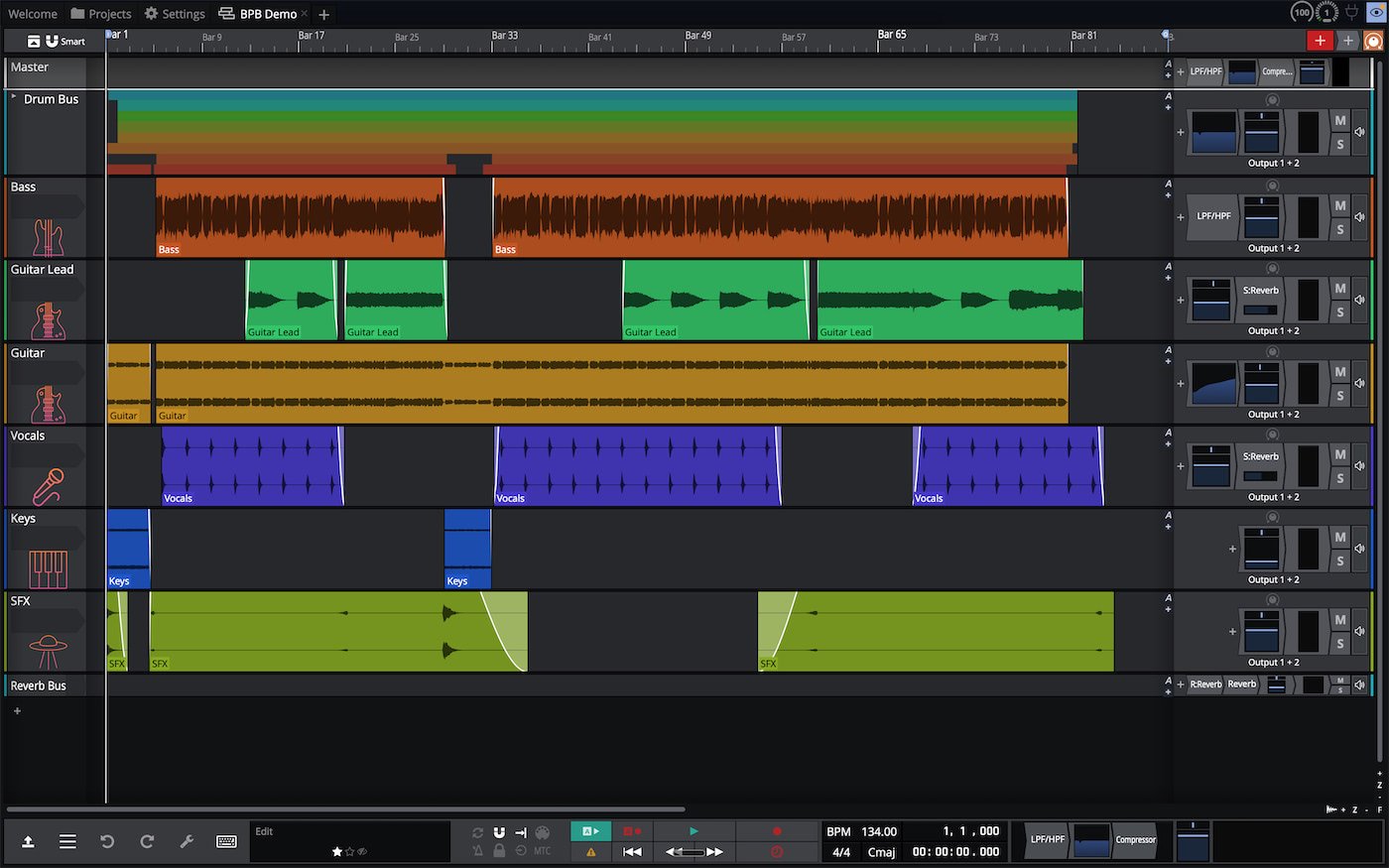
-
No track limits.
-
It’s cross-platform.
-
Full plugin support. ( VST2, VST3, and AU (on Mac).
-
It works offline. (Unlike browser-based options)
Waveform’s interface takes some adjustment. It doesn’t follow the traditional “mixer on the bottom, timeline on top” layout that most DAWs use.
Give it a week, and it clicks. But those first few sessions will feel unfamiliar.

If you click “read mode” (im on librewolf but any firefox fork will do) you can access the whole article just fine.