• 3 posts
  • 12 comments
Joined 3 years ago
Cake day: June 15th, 2023
  • There is a conflict between confidentiality and mandatory reporting. The ideal of confidentiality is that anything you say in private that you don’t want recorded or repeated should be kept private. The ideal of mandatory reporting is that if anyone finds out about a crime a person has committed, it should be reported for the sake of justice.

    The solution is that we limit both of them in different situations. Confidentiality is generally limited to those who have a crucial and necessary role in keeping information confidential. In other words, those positions or professions that are deemed essential by society and which require confidentiality to function properly. That’s lawyers, medical professionals, and in some cases, religious professionals.

    Mandatory reporting is generally limited to those who are in a position that allows access to vulnerable individuals. That’s teachers, social workers, police officers, and sometimes also medical professionals or religious professionals.

    Because those include some of the same categories, the law gets very specific and sometimes even contradictory in different jurisdictions.

  • I’m not sure of the details about the situation in Iran, but from my understanding, it seems that it would be much safer to set up a server outside the country that’s run by you and others inside the country. It’s fairly easy to set up virtual private servers, although you may need to arrange payment outside the country.

    That would be much safer than hosting it with the physical infrastructure inside your borders. If you’re hosting the physical infrastructure, it makes it much easier to locate. If the server is not in Iran, then it may be difficult or impossible for the government to seize it and access the contents.

    There are people on this site who are far more expert than I when it comes to network security. Follow their feedback and you may even find someone willing to partner with you to help set it up.

I’ve been using this as my e-book library management for a couple of months now, ever since switching from booklore, which imploded a bit.

I just noticed today that it hasn’t shipped an update since February, and in fact there’s been essentially no activity on the GitHub page since early February. Four months is not that much time without an update, but it is a pretty long time without any new commits. I’m not seeing the lead developer replying to reports, etc. Is this still an active project? Does anybody know? It seemed like there was a lot of enthusiasm behind this project six months ago, so I’m not sure.

Edit: There is an active community on Discord that is working on updates. There is a fork with bugfixes here.

  • I really don’t get this latest series if tantrums from LibreOffice/The Document Foundation. They are attacking every other up-and-coming open source document project.

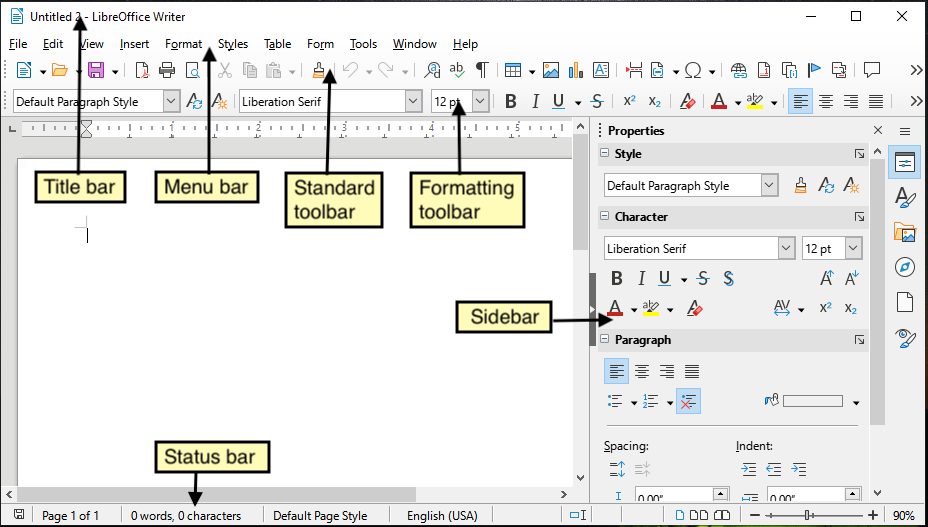
    Are you mad about people choosing a different project that’s easier to switch from M$? Stay mad I guess, or make your project better. LibreOffice hasn’t had a major UI update in a decade, and it was a decade overdue at the time. The menus are a crowded mess with poorly thought-out hierarchy. Mobile and collaborative editors are a joke. No one cares if LibreOffice technically has the best backend, with the most accurate rendering and niche features, if it is harder for the average mainstream user to learn and use.

    You can burn your energy bemoaning the loss of users… or you can be better and win them back. Rarely both.

    Last thing, a few facts about the “dreaded” OOXML format they are railing against.

    1. It is an open standard since 2006. Stop litigating a debate that ended two decades ago.
    2. It is a recognized ISO standard, just like ODF. (ISO/IEC 29500)
    3. LibreOffice also supports OOXML and allows users to set it as default.
    4. It is already the de-facto standard, just like PDF or MP3 started as proprietary formats but are now open and among the most widely used formats in their respective areas.
  • I’ve had a relatively good experience with OnlyOffice, although it has some issues.

    Personally I don’t see interoperability as an anti-open issue, but I can appreciate the stance. I think I have to investigate to understand how the Microsoft format diverges from the open standard for office XML files, or in what way the format remains proprietary. I had been under the impression that OnlyOffice follows the open standard.

    OnlyOffice does ape Microsoft Office in a lot of ways but I see that as a positive. Users are far more likely in my opinion to switch to something that looks and feels familiar.

    LibreOffice is hard to use. The menus and shortcuts are not well organized and the entire suite feels like a relic from the early 2000s. If they invested in a modern UI with less friction for users who are looking for MS alternatives, they wouldn’t be facing competition from projects like OnlyOffice. If they invested in feature parity for mobile users, they wouldn’t be losing potential users to those who offer it.

    They have an incredibly powerful backend with far more capability than the more junior OnlyOffice. Yet they fail to recognize why that just doesn’t matter to the majority of users. Most users just want to quickly author and edit files, share them with other users, and get on with the next task. LibreOffice has become overly fixated on niche features and optimizations that are very cool from a technical standpoint but are totally out of touch.

    By the way, LibreOffice also supports OOXML, so… do with that what you want.