Think of particles as bundles of conserved quantities like charge, energy, mass, etc.
In interactions, these quantities can be re-bundled into different particles—but the re-bundling isn’t creating or destroying the conserved quantities themselves.

Think of particles as bundles of conserved quantities like charge, energy, mass, etc.
In interactions, these quantities can be re-bundled into different particles—but the re-bundling isn’t creating or destroying the conserved quantities themselves.

Virtual particles appear and disappear in the course of interactions between real particles. The general phenomenon of particles appearing and disappearing in interactions happens with both real and virtual particles—but the interactions are such that momentum, charge, etc. are always conserved. So the things you should expect to see persisting in existence aren’t particles themselves, but those conserved properties.

Safety issues aside, I don’t like the power grid topology they create—where power is distributed radially from a single centralized source. Systems like that are fragile and inflexible, with a single point of failure; and they promote similar institutions to control them.
Networks are more robust when they’re distributed and redundant, with lots of interconnected local sources. Solar and wind are a lot more amenable to that kind of structure.

Every egg that hatches was previously fertilized (at least for sexually-reproducing organisms). The animal that hatches from the fertilized egg became a genetically distinct organism when its egg was fertilized, not when the egg was hatched or laid.
In the case of chickens, eggs are fertilized (if at all) before being laid; and when we talk about “unfertilized eggs”, we usually mean eggs that were laid without being fertilized. Such eggs were not part of the discussion until you introduced them.

A quote isn’t “literal” if you insert a word that completely negates its meaning.

What’s your point? Unfertilized eggs don’t hatch, so they’re not part of the scenario in question.

No, but the fallacy is in thinking the new species appears when the egg hatches, rather than when it’s fertilized. The egg is already the new offspring.

The egg is the same organism as the individual that hatches out of it.
It’s like saying “which came first, the infant or the adult”?

There’s not a hard-coded wiring diagram of how the neurons from the brain connect to the rest of the body—everybody’s wired a bit differently, and the brain normally figures out how to work with what it’s got during development. So there’s no one-to-one way to connect the nerves from one person’s brain to those in another person’s body—and if it doesn’t get the signals it’s expecting, it will just seem like noise.
Besides which—if I remember correctly, you can’t generally reconnect severed nerves. Instead, the remaining portion of the nerve cell has to grow a new axon that retraces the route of the old one, and it can only trace the old path for a limited distance (like, if it’s close enough to receive chemical signals from the original site). But I’m not sure I’ve got all the details right on that.

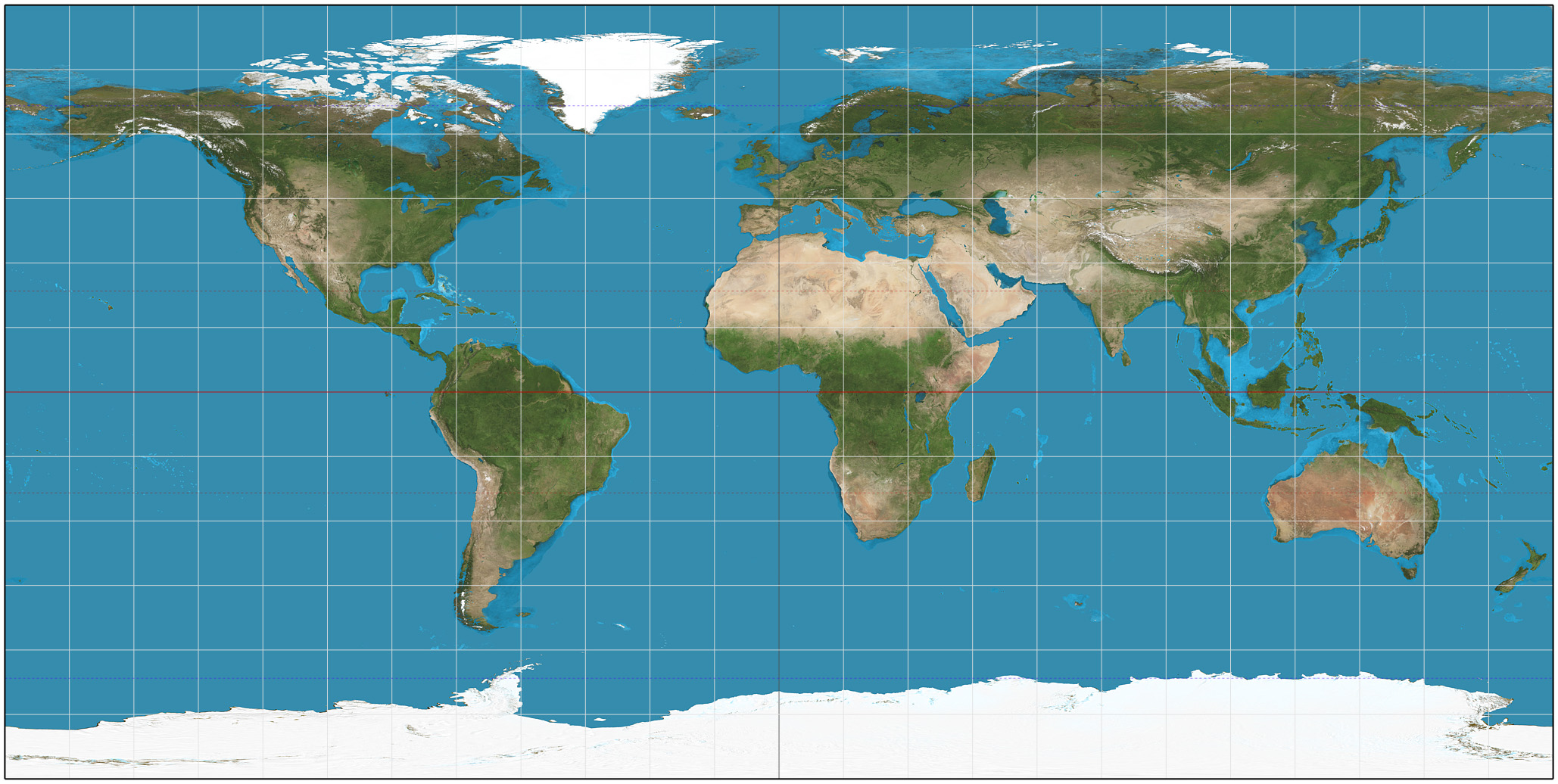
If you use a plate carrée projection (in which all lines of latitude and longitude are rectangular and equal), it’s a simple linear formula:
x = (longitude + 180) * (map width / 360)
y = (-latitude + 90) * (map height / 180)
(Assuming west and south coordinates are negative, and all degrees are expressed as decimals.)
The Velvet Underground and Nico.

Does that suggest that this type of angiosperms existed in this local ecosystem before the extinction, but maybe only dispersed globally afterward? (I.e., that local biodiversity was a successful bet-hedging strategy against mass extinction?)
Plus caffeine, carbonation, and way more sugar.

The team matched the products with each other based on a variety of factors such as the ingredients, packaging, and size, to achieve the closest match possible. So, for instance, almond milk was paired with normal milk, vegan brownies with dairy-based brownies, and plant-based meat with regular meat. Other products included were lasagne, coleslaw, pesto, mayonnaise, yoghurt and cake.
So they only looked at products traditionally made using animal products, and compared them to similar products with plant-based substitutes.
An alternative headline could have been “Imitative foods contain more imitative ingredients”.

In each and every region the researchers looked at, Deo said, “there was distinguishable information about movements that span the entire body, not just the canonical body part the motor homunculus model would have suggested.” In other words, while one region might be most strongly activated for hand movements, it also contains signals concerning movements in the face, legs, and everywhere else.
Seems like that could go a long way towards explaining synesthesia as well.

Pre-2006:
Post-2006:
I’m sure I’m overlooking some things, but the pre-2006 decades seem like a more drastic change overall.

Sure, but you’re forced to fall back on parsing words letter-by-letter—you can’t read whole words at a glance like normal.

More unstable fluctuations in the populations of other marine species.

I
guess
you
could
say
that.
Not sure I’d call it a complete cell cycle if they have to keep feeding it pre-built ribosomes for protein synthesis.